German mustard has earned its reputation as one of the most distinctive condiment traditions in the world. Whether you are reaching for a squeeze bottle to dress a bratwurst at a backyard cookout or stirring a spoonful into a pan sauce, the mustard you choose makes a real difference in the final result.
The problem is that the category can feel genuinely confusing from the outside. Some brands lean sweet and creamy, some go sharp and sinus-clearing hot, and a handful manage to sit somewhere beautifully in between. Different regions of Germany have produced their own signature styles for centuries, and each one has loyal advocates who will argue passionately for their preferred jar.
This article covers ten of the best German mustard brands available today, breaking down what each one does well, who each suits best, and what you should know before you spend your money. By the time you finish reading, you will have a clear picture of where each brand fits and which one belongs in your kitchen.
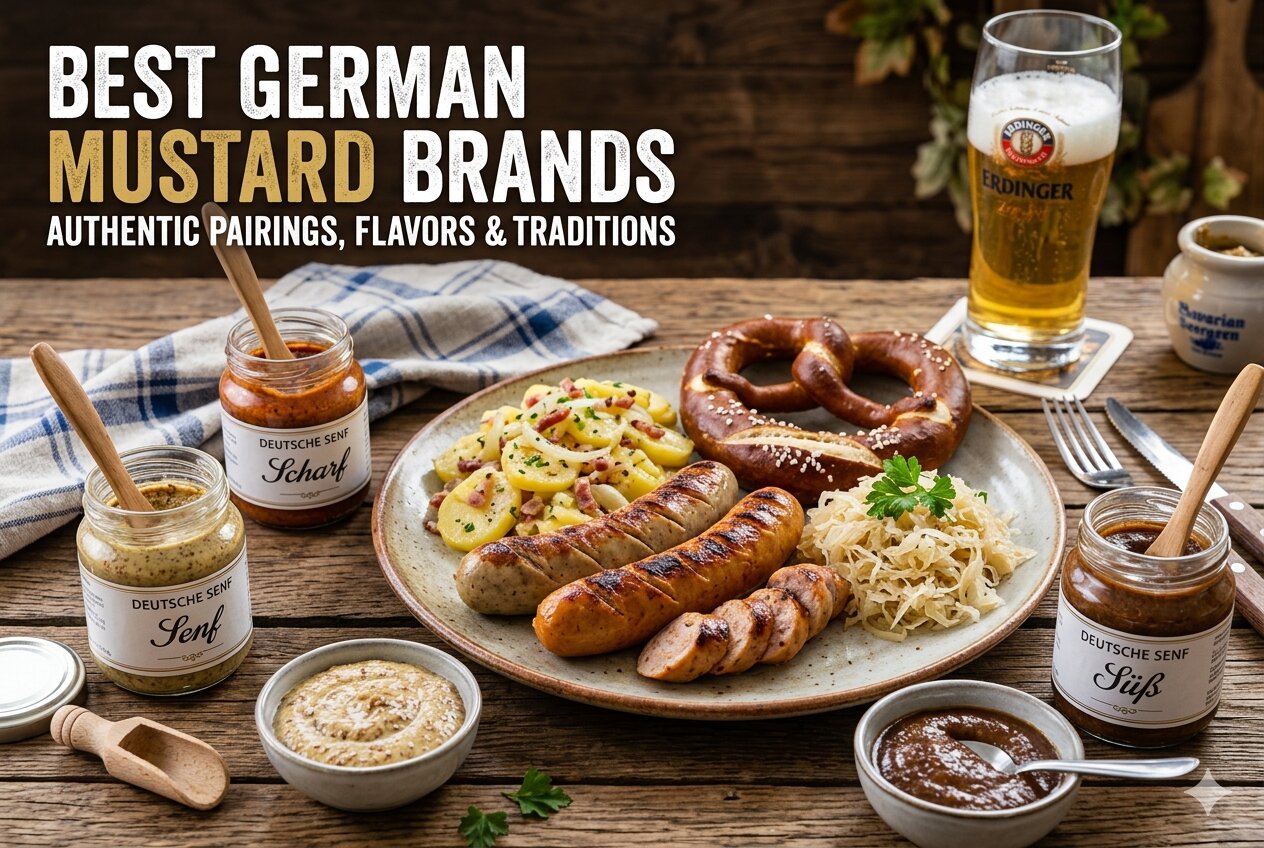
How We Selected the Best German Mustard Brands
Our team approached this list the same way a serious cook would: by going beyond marketing claims and looking carefully at what each brand actually delivers in terms of flavor, quality, and real-world value for shoppers.
- Authenticity of origin: We prioritized brands with genuine German roots, traditional production methods, and honest regional identity rather than generic imitations.
- Ingredient transparency: We looked for brands using high-quality mustard seeds, natural vinegars, and clean spice blends, with no unnecessary artificial additives or preservatives.
- Flavor range and consistency: Strong brands offer more than one variety and maintain consistent quality across every product in their lineup, not just their flagship option.
- Consumer reputation: Sustained positive feedback from everyday shoppers and food professionals alike carried significant weight in our evaluation process.
- Heritage and brand credibility: Brands with documented histories and long-standing reputations in the German food market were given priority, since track record matters in this category.
- Versatility: We considered how well each brand’s mustards perform across different uses, from classic sausage pairings to cooking applications, marinades, and dressings.
- Availability: We factored in how easily shoppers outside Germany can actually find these products, whether in specialty stores or online retail.
Every brand on this list passed our review on multiple fronts, not just one or two. That gives you a shortlist you can genuinely trust when making your next purchase decision.
Best German Mustard Brands (Expert Review)
The brands featured here represent the strongest performers across Germany’s rich and varied mustard tradition. Each one has earned its place on this list for a different set of reasons, which is exactly what makes this category so interesting to explore.
1 Löwensenf

Löwensenf is Germany’s most recognized mustard brand for good reason. Its flagship Extra Hot variety has been produced in Düsseldorf since 1920, and the brand was officially named one of Germany’s “Brands of the Century,” a distinction awarded to products that have shaped national consumer culture over generations.
The mustards stand out because they use only natural ingredients, earn gold medals from the German Agricultural Society, and deliver a clean, sharp heat that comes from the mustard seed itself rather than from artificial enhancement. The Extra Hot version is a genuine test of your heat tolerance, while the Medium option offers approachable spice without sacrificing character.
Löwensenf is the best choice for anyone who wants an authentic Düsseldorf-style mustard with a serious track record and broad availability outside Germany. The brand is now part of the Develey Group, which ensures consistent production standards and wide international distribution.
2 Händlmaier

If your cooking tilts toward Bavarian tradition, Händlmaier is the brand that defines sweet mustard in that region. Founded in Regensburg in 1910, this family-owned producer built its entire identity around the creamy, lightly sweet mustard that Bavarians have served alongside Weißwurst and soft pretzels for well over a century.
The signature sweet Bavarian variety has a slightly grainy texture produced by a specific grinding process, and the balance of mild heat with natural sweetness is genuinely difficult for competitors to replicate. The brand also offers medium-hot and extra-hot varieties, plus flavored options, so there is room to explore once you have fallen for the classic.
Händlmaier suits anyone drawn to traditional Bavarian cuisine or those who simply want a sweeter, more approachable mustard that pairs beautifully with pork dishes, charcuterie boards, and soft bread. It exports internationally and remains widely available through specialty German food retailers and online stores.
3 Develey

Develey is one of the oldest condiment producers in Germany, founded in Munich in 1845. The brand’s sweet mustard recipe was developed by founder Johann Conrad Develey in 1854, and that original formula is still in production today, making it one of the most historically continuous mustard products anywhere in the world.
The portfolio covers a broad sweep of styles: Wholegrain, Sweet Bavarian, Medium, Hot, and Dijon-influenced varieties. That range, combined with consistent flavor and a philosophy centered on clear, balanced taste rather than novelty, makes Develey a reliable choice for professional kitchens and home cooks who value predictability.
Develey now supplies sauces and mustards to McDonald’s across more than 40 countries, which speaks to the brand’s ability to deliver consistent quality at serious scale. For shoppers seeking a trusted, heritage-backed German mustard with wide international reach, Develey is a natural starting point.
4 Thomy

Thomy is a familiar name across German-speaking Europe, recognized as much for its distinctive colorful tubes as for the quality of its products. The brand originated in Stuttgart and formally adopted the Thomy name in 1930 before being acquired by Nestlé in 1971, which gave it the distribution muscle to become a supermarket staple.
Its mustard lines lean mild to medium in heat and carry a slightly sweet, clean flavor that works particularly well in salad dressings, sandwich spreads, and everyday cooking. The tube format is a practical advantage: it keeps air out, extends shelf life, and makes measured use much easier than spooning from a jar.
5 Hengstenberg
Hengstenberg was established in Esslingen in 1869 and built its early reputation on vinegar and pickled products before adding mustard to its range. The brand operates from the same headquarters it moved into in 1895, and that sense of continuity runs through everything it produces. Quality and tradition are not just marketing language for Hengstenberg; they are structural commitments backed by over 150 years of operation.
The mustard range mirrors the brand’s broader identity: straightforward, honest, and made from decent raw ingredients. Hengstenberg describes its philosophy simply as “the best from the good,” meaning no shortcuts on ingredients and no unnecessary additives. The result is a mustard that tastes clean and direct, without any artificial flavors getting in the way.
Hengstenberg appeals strongly to home cooks who appreciate a no-frills, high-integrity product. It pairs well with cold cuts, sausages, and pickled dishes, which makes obvious sense given the brand’s heritage in the German charcuterie and preserves tradition. It is widely available through specialty importers and German food online retailers.
6 Bautz’ner
Bautz’ner holds a special place as the preferred mustard brand across large parts of eastern Germany. The brand developed its loyal following during the decades when it was among the few widely available condiment options in the region, and that loyalty has persisted well into the modern era. Today it is part of the Develey Group, which maintains production and preserves the brand’s distinctive character.
The mustard is medium-hot with a texture that sits between smooth and slightly grainy, delivering a satisfying heat that is noticeable but never aggressive. It is the kind of everyday mustard that works beautifully on a simple bread roll with cold sausage, which is exactly the use case it was designed for.
7 Münchner Kindl
Münchner Kindl is built around a clear philosophy: mustard is a serious culinary ingredient, not a secondary afterthought. The brand positions itself as authentically regional, with deep roots in Munich and Bavaria, and its products are used in both home kitchens and professional restaurant settings where clean flavors and well-defined aromas are the priority.
Beyond the classic sweet Bavarian and medium varieties, the range extends into specialty mustards including fig, mango, horseradish, and beer options. All products are free from palm oil and typically suitable for vegetarian diets. That combination of culinary ambition and clean ingredients makes Münchner Kindl genuinely interesting for modern shoppers who want more from a condiment brand.
This brand suits curious food lovers who want to go beyond basic yellow mustard and experiment with creative pairings. The specialty range works particularly well with cheese boards, grilled meats, and creative sandwich combinations. It is available through German food importers and specialty delicatessens internationally.
8 Kühne
Kühne is a major German food brand with well over a century of history behind it, best known for its pickled products but equally serious about its mustard range. The brand brings the same commitment to natural fermentation and quality sourcing that defines its pickle and vinegar lines to every jar of mustard it produces.
The mustard portfolio covers medium and medium-hot styles with a clean, slightly tangy profile that works across a wide range of food pairings. Kühne does not overcomplicate things, and that restraint is a strength. The flavor is consistent, reliable, and genuinely satisfying in everyday use, which is exactly what a workhorse condiment brand should deliver.
9 Schaller & Weber
Schaller & Weber started life as a butcher’s shop opened in Manhattan by Ferdinand Schaller, a German craftsman who brought traditional recipes and techniques from his home country to New York’s Yorkville neighborhood. The brand built a devoted following among New Yorkers who valued authentic German flavors, and its mustard range reflects that same commitment to traditional quality.
The brand’s Düsseldorf-style horseradish mustard is a standout product, combining the sharp heat of German mustard with a distinct horseradish character that elevates sausages, pretzels, and deli sandwiches significantly above what generic alternatives can achieve. All products are made with natural ingredients, and the deli heritage of the brand gives the mustard line an authenticity that is hard to manufacture artificially.
Schaller & Weber is an excellent choice for shoppers in the United States who want genuine German-style mustard with easy local access. The brand bridges old-world tradition and North American availability in a way that very few competitors manage, and the horseradish mustard in particular has a loyal base of repeat purchasers.
10 Alstertor (Ika’s Garden)
Alstertor, sold internationally under the Ika’s Garden label, brings a charming and distinctive presentation to German mustard. The brand packages its Düsseldorf-style mustard in reusable ceramic beer mugs and glass steins, which makes it an appealing gift option while also signaling a commitment to quality and craftsmanship over generic retail packaging.
The mustard itself is smooth, spicy, and made with simple, clean ingredients including water, mustard seed, spirit vinegar, and salt. The flavor is crisp and sharp in the classic Düsseldorf tradition, without any artificial flavors or unnecessary additives. Products are BPA-free and directly imported from Germany, which means what reaches you is genuinely authentic.
Final Thoughts
German mustard is a category with far more depth and personality than most shoppers initially expect. Each brand reviewed here brings something genuinely different to the table: distinct regional roots, a specific flavor profile, or a particular use case that sets it apart from the rest. No single option is universally “best” because the right choice depends entirely on what you are cooking, how much heat you enjoy, and whether tradition or versatility matters more to you.
Take the time to consider your own preferences before deciding. A sweet Bavarian style suits completely different meals than an extra-hot Düsseldorf variety, and everyday cooking needs a different product than a specialty charcuterie board. Use this guide as your starting point, trust your palate, and you will find the perfect German mustard for your kitchen without any guesswork.