Finding the right Fitbit for a child is not always as simple as picking the newest model. Some focus on making exercise fun, while others add communication, GPS, and family features that older kids may appreciate.
We compared several Fitbit models that work well for children, paying close attention to comfort, battery life, durability, and everyday usefulness. Some are made specifically for younger kids, while others suit older children who want extra fitness features.
The reviews below explain what each model does well, who it fits best, and where it falls short so you can choose with confidence.
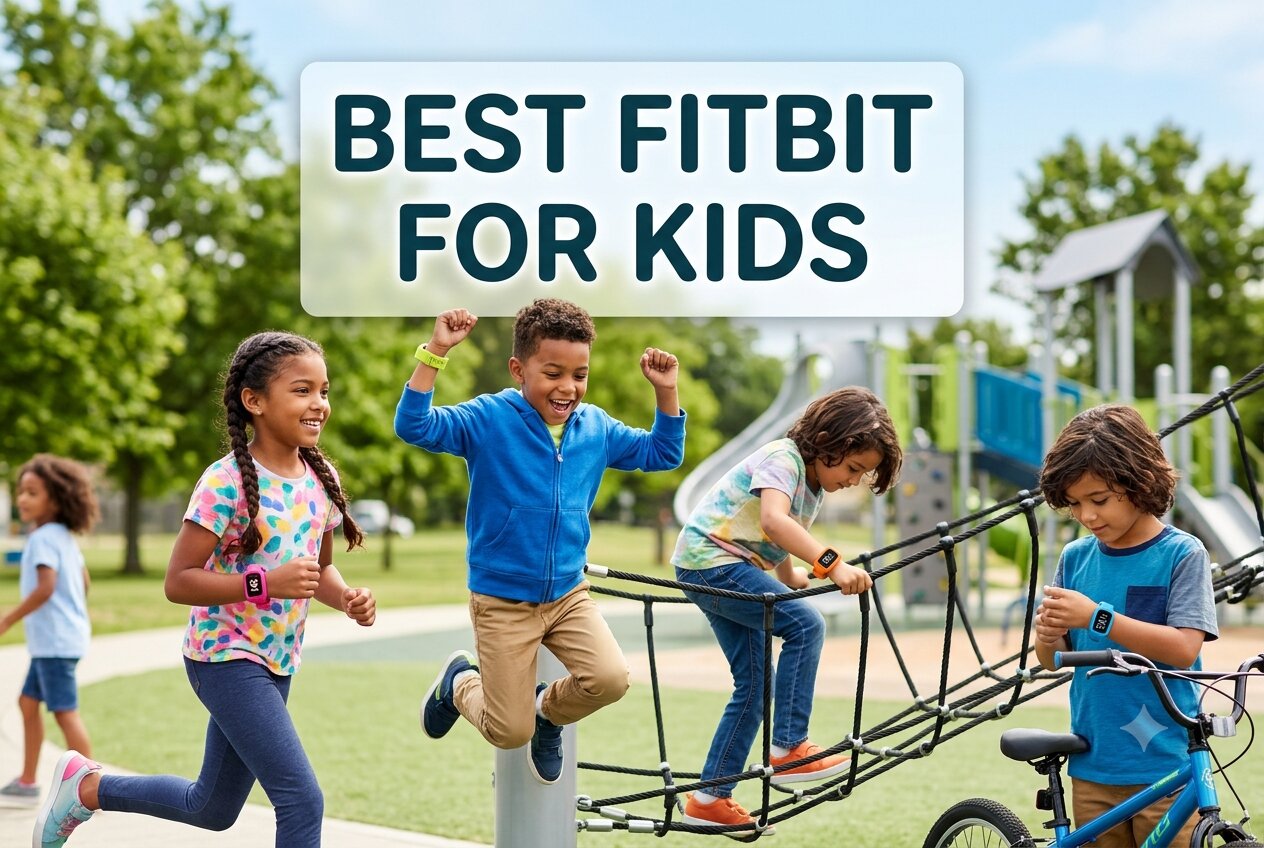 How We Selected the Best Fitbit for Kids
Every Fitbit in this guide was chosen after carefully reviewing its features, intended age group, build quality, tracking abilities, and overall value for families. We compared kid focused models alongside a few standard Fitbit trackers that older children and teenagers can comfortably use. Rather than focusing on flashy features, we looked at how each device performs during everyday use at school, home, sports practice, and family activities.
We also considered comfort during long wear, battery performance, ease of setup, and the features parents actually use. A fitness tracker only succeeds if kids enjoy wearing it, so motivation and simplicity played a major role in our selections.
- Activity Tracking: Accurate step counting and daily activity monitoring that encourage healthy habits.
- Battery Life: Longer battery life means fewer charging interruptions and happier kids.
- Comfort: Lightweight designs that remain comfortable during school, play, and sleep.
- Kid Friendly Features: Games, challenges, rewards, or family activities that help keep children interested.
- Durability: Strong construction that stands up to everyday bumps, active play, and water exposure.
- Parent Features: Easy account management, family controls, and monitoring where available.
These factors helped separate the strongest choices from the rest. With that process complete, here are the Fitbit models that impressed us the most.
Best Fitbit for Kids (Expert Ranking & Review)
Each Fitbit below serves a slightly different purpose. Some are perfect for younger children just getting active, while others are better for older kids who want more advanced fitness features.
1. Fitbit Ace 2 Activity Tracker for Kids, Built for Everyday Adventures
UNAVAILABLEThe Fitbit Ace 2 remains one of the easiest activity trackers for younger children to enjoy. During our review, its simple design and playful approach made it feel welcoming instead of overwhelming. It encourages healthy habits without filling the screen with unnecessary distractions.
One feature we especially liked was how naturally it fits into family fitness routines. Activity challenges, sleep tracking, and parent connections help make movement something children actually look forward to instead of treating it like homework.
The soft protective design feels ready for playground use, everyday bumps, and water activities. Its lightweight construction stays comfortable throughout the day, making it easy for kids to forget they are even wearing it.
This tracker is an excellent fit for children around six years old and older who want a dependable first fitness tracker with enough features to stay interesting while remaining very easy to understand.
Key Specs
| Specification | Details |
|---|---|
| Recommended Age | Kids 6+ |
| Battery Life | Up to 5 days |
| Water Resistance | Swim proof |
| Tracking | Activity and sleep |
| Family Features | Challenges and parent connections |
Pros
- Easy for young children to use
- Comfortable all day fit
- Swim proof design
- Encourages family activity
Cons
- Smaller display than newer models
2. Fitbit Ace 2 Grape Edition, Fun Fitness in a Colorful Package
UNAVAILABLEThe Grape version delivers the same dependable experience as the standard Ace 2 while offering another style that many kids will enjoy wearing every day. Sometimes a favorite color is enough to keep a child excited about using a fitness tracker.
Its biggest strength remains its balance between simplicity and useful health tracking. Kids receive activity goals, sleep tracking, and motivating challenges without having to learn complicated menus or settings.
During our comparison, the tracker stayed comfortable through active play, walking, and bedtime. The battery also lasted several days before needing another charge, making it convenient for busy families.
Parents looking for a dependable tracker without extra communication features will appreciate how easy this model is to set up and manage. It keeps the focus exactly where it belongs, helping children stay active.
Key Specs
| Specification | Details |
|---|---|
| Recommended Age | Kids 6+ |
| Battery Life | Up to 5 days |
| Water Resistance | Swim proof |
| Activity Tracking | Steps and sleep |
| Family Features | Activity challenges |
Pros
- Kid friendly interface
- Comfortable lightweight band
- Reliable battery life
Cons
- Lacks built in GPS
- No calling or messaging features
3. Fitbit Charge 2, A Great Choice for Active Older Kids

Older children and teenagers often want something that feels more like an adult fitness tracker. The Fitbit Charge 2 fills that role well with its larger feature set and detailed activity tracking. It offers plenty of information without becoming difficult to use.
One of the biggest highlights during our evaluation was its continuous heart rate tracking. Combined with Connected GPS support, workout modes, and cardio fitness insights, it gives older kids much deeper fitness information than the Ace series.
The OLED display also makes daily use more enjoyable. Notifications for calls, texts, and calendar reminders help older children stay connected without constantly reaching for a phone. Guided breathing sessions are another thoughtful addition that promotes healthy habits beyond physical activity.
This model is best suited for responsible older children or teenagers who participate in sports, enjoy tracking workouts, or simply want more detailed fitness information than a basic activity tracker can provide.
Key Specs
| Specification | Details |
|---|---|
| Heart Rate Tracking | Continuous wrist based monitoring |
| Battery Life | Up to 5 days |
| GPS | Connected GPS |
| Display | OLED display |
| Activity Tracking | Steps, calories, sleep, workouts |
Pros
- Detailed fitness tracking
- Continuous heart rate monitoring
- Helpful workout modes
- Smart notifications
Cons
- More features than younger children typically need
- Not specifically designed for kids
4. Fitbit Ace 3 Minions Special Edition, The Most Fun Fitbit for Younger Kids

The Ace 3 builds on everything that made the Ace 2 popular while adding noticeable improvements. The playful Minions design immediately grabs attention, making it a tracker many children will be excited to wear every day.
Battery life was one of the strongest improvements we noticed. Lasting up to eight days between charges means children can spend more time wearing it and less time searching for the charging cable. That longer battery also makes it easier to track sleep consistently.
The tracker remains swim resistant and keeps its focus on building healthy habits through activity goals, family challenges, and sleep tracking. The companion app helps parents stay involved while encouraging kids to stay active without making fitness feel like a chore.
If you are buying a first Fitbit for a younger child, this model strikes an excellent balance between durability, simplicity, and motivation. It feels polished without becoming complicated.
Key Specs
| Specification | Details |
|---|---|
| Recommended Age | Kids 6+ |
| Battery Life | Up to 8 days |
| Water Resistance | Up to 50 meters |
| Tracking | Activity and sleep |
| Family Features | Family challenges and parent app |
Pros
- Excellent battery life
- Swim resistant construction
- Comfortable for everyday wear
- Fun Minions themed design
Cons
- Limited advanced fitness metrics
5. Fitbit Google Ace LTE, The Best Premium Fitbit for Kids

The Fitbit Google Ace LTE is easily the most advanced option in this guide. Instead of focusing only on activity tracking, it combines fitness, communication, location sharing, and interactive games into one device built specifically for children.
Its built in 4G LTE and GPS set it apart from every other Fitbit in this roundup. Parents can stay connected through secure calling, messaging, and location sharing while children enjoy movement based games that reward physical activity instead of encouraging long periods of sitting.
School Time is another feature we found especially practical. It limits games during class while still allowing children to contact approved family members when necessary. That balance between safety and independence makes it an appealing choice for many families.
This is the Fitbit we recommend for parents who want fitness tracking along with communication and location features. While it requires an Ace Pass data plan, the additional functionality makes it a strong all in one solution for school age children.
Key Specs
| Specification | Details |
|---|---|
| Connectivity | 4G LTE and Bluetooth |
| GPS | Built in GPS |
| Battery Life | 16 plus hours |
| Storage | 32 GB |
| Features | Calling, messaging, activity games |
Pros
- Built in GPS
- Secure calling and messaging
- Activity based games keep kids moving
- School Time mode
Cons
- Ace Pass data plan required
- Higher price than basic Fitbit models
Best Fitbit for Kids: A Quick Rundown
- Fitbit Ace 2 Activity Tracker for Kids: Best Overall for younger children who want a simple, dependable fitness tracker.
- Fitbit Ace 2 Grape Edition: Best Value for families who want the trusted Ace 2 experience in another fun style.
- Fitbit Charge 2: Best for Older Kids and Teens who want advanced fitness tracking, heart rate monitoring, and workout features.
- Fitbit Ace 3 Minions Special Edition: Best Battery Life with kid friendly features, swim resistance, and up to eight days between charges.
- Fitbit Google Ace LTE: Best Premium Pick for families who want GPS, secure calling, messaging, and activity based games in one smartwatch.
Final Thoughts
The right Fitbit depends on your child’s age, interests, and daily routine. Younger children usually benefit most from simple activity trackers that encourage movement through goals and family challenges, while older kids may appreciate detailed fitness tracking or communication features that fit their growing independence.
Think about which features your family will actually use before making your choice. Battery life, comfort, durability, and ease of use often matter just as much as advanced technology. Once you match the tracker to your child’s needs, you’ll have a device that can help build healthy habits and keep them motivated every day.